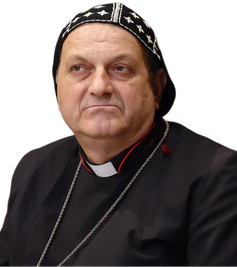
In a world increasingly determined to erase suffering Bishop Erik VARDEN of Norway recalls something radically different: suffering is not a scandal external to human existence, but part of the human condition. Yet it does not have to be meaningless. In this conversation for the Vatican John Paul II Foundation, Bishop Varden reflects on dignity, hope, the Cross, and the Christian understanding of suffering. He argues that it is precisely in moments of greatest weakness that the truth about the human person, and about God, can become most clearly visible.
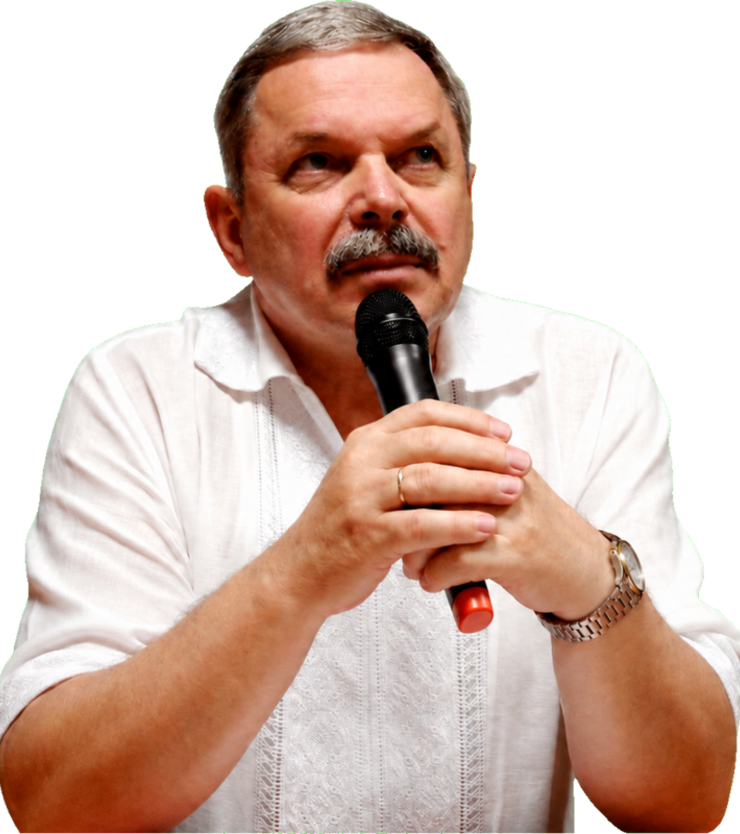
Michał Kłosowski, vaticanjp2.va: Modern man often seems to live within a particular tension. On the one hand, when we suffer, we want to identify who is responsible: if I suffer, someone must be at fault. On the other hand, we increasingly treat suffering itself as something alien to human nature, something that ought simply to be eliminated. Is this the right way to think about suffering?
Bishop Erik VARDEN OSCO: Well, sometimes, when justice has genuinely been violated, an approach like one you first describe may of course be justified. I am emphatically not advocating a kind of passive determinism in which injustice is simply accepted and nothing is done about it. But the fact remains that very few human lives are entirely free from suffering. To be human hurts. We are exposed to physical suffering, psychological suffering, suffering within relationships. The first step towards experiencing suffering rightly, and towards discovering whether it can have meaning, is therefore to acknowledge this fundamental truth: to be human, and to grow as a human being, means to some extent growing through suffering. This does not amount to praising suffering for its own sake. Suffering remains something deeply disturbing. It must never be aestheticised or romanticised. Yet even on a purely natural level, we can see that it may bear fruit. It can teach us patience, for instance, and patience is an extraordinarily precious virtue. It can also purify our vision and make us more aware of our dependence on other people.
So can we actually learn to suffer “well”? Can suffering lead us towards something greater?
We learn above all through example. We look at other people who have received their suffering and found a way of giving it meaning. Very often, what is more difficult than pain itself is the feeling that the pain serves no purpose, that it is simply meaningless. It is precisely here that Christianity offers an answer. If I live my suffering in union with Christ, it can become profoundly meaningful, even sublimely meaningful. It does not cease to hurt, but it ceases to be pointless. It can become participation in the mystery of the redemption of the world.
This is why the lives of the saints have traditionally been so important. They are lessons in this sense. They do not glorify suffering, nor the accidental tragedies that marked so many human lives. Rather, they show that suffering can be transformed, that it can lead to patience and can become an entry into the mystery of Christ’s sacrifice. The saints for example are not heroes because they suffered. They are witnesses to the possibility of transforming suffering. Their lives show us that even experiences that may seem utterly humiliating like illness, violence, or even rejection do not have to become the final word about a human being.
When we speak about suffering lived publicly, the final days of Pope John Paul II are often described as a particularly powerful testimony, some called it the „fifth Gospel”. What did those final days reveal about human dignity?
I am convinced that John Paul II himself wanted this to become part of his teaching. He was extraordinarily conscious of the meaning of gestures and symbols. In a very certain sense, he remained an actor until the very end, in the deepest meaning of that word.
Towards the end of his life, with great humility, he wanted to show the world that even when the body ceases to function as it once did, even when external beauty disappears and physical strength is exhausted, the human person does not lose his or her dignity. A person can be at the very limit of his strength, close to death, and still possess hope and still have something important to communicate. When everything appears to be fading, what matters most remains: the capacity for hope and the capacity to communicate meaning.
John Paul II showed that even in extreme physical deterioration a human being does not cease to be a subject, does not cease to speak. His final days were a testimony that suffering is not meaningless and that participation in the Passion of Christ is not passive. It can be a profoundly active experience.
That brings us directly to hope, the theme of the Jubilee year 2025 started by pope Francis and concluded by Leo XIV. What kind of hope can an encounter with the Cross offer contemporary culture, given that the Cross is, after all, also a sign of suffering?
Hope is the conviction that what exists now is not final. I of course may find myself immersed in darkness, but I know that this condition is temporary. Hope is also the awareness that life is not static, it is a journey towards a destination, and that destination is good. If I allow myself to be led by God’s grace and truth, I am moving towards fulfilment.
Christian hope is therefore not naïve optimism. It is not the belief that everything will necessarily turn out well according to our temporal expectations. It is something deeper: the awareness that the present moment, however dark it may be, is not definitive. So one can say that hope presupposes movement. It means believing that life is going somewhere, that it has a purpose and that this purpose is good. And so hope is intimately connected with meaning — with the conviction that our life has significance, even when it passes through suffering.
Can we draw hope from sufferings we have already experienced and survived?
Yes, although when we are actually in pain, this can be extremely difficult. That is why we need one another. There are moments when I need someone else to have hope for me. This, too, is profoundly Christian. It is here that the Church reveals herself as a community. When one member suffers, the whole body suffers; when one member receives consolation, all rejoice. We are not alone.
One of the great illusions of modernity is the idea that the individual is autonomous. The experience of suffering reveals precisely the opposite. It reveals our dependence upon one another. There are moments when we are no longer able to sustain hope for ourselves and need someone else to carry it on our behalf. This is also why saints such as Saint George or Saint Roch became so important within the tradition. Beyond the glorious elements of their stories, their lives showed that there is a path through suffering.
And yet contemporary culture tends to flee from suffering. Can Christianity remind us that suffering cannot simply be eliminated from human existence?
Yes, and it can do so in two ways. First, each of us should courageously carry his or her own burden, whether visible or hidden, with dignity and patience. Second, we must help other people carry theirs. We have to reach out, create relationships, and show that the communion of the Church is something real. The credibility of Christianity depends upon whether we actually live what we proclaim. Words alone are not enough. Concrete acts of love are necessary.
Maturity is born precisely in this space: in the ability to carry our own burden while remaining ready to help another person carry theirs.
In the age of social media, self-improvement and carefully constructed images of the perfect life, suffering can even come to be regarded as something almost „unethical”. We see this particularly clearly in debates about euthanasia.
Yes, and this is a very important problem. Many people fear suffering because they fear the loss of dignity. Contemporary culture frequently interprets suffering as a threat to human dignity. This helps explain the growing support for solutions that promise to remove suffering definitively, even at the price of life itself and yet it is possible to retain immense dignity even in extreme weakness. I would go further: it is precisely in suffering that the extent of our corporate, societal dignity is tested. We discover whether a human being is being treated as a person or merely as a problem to be solved.
So the problem also lies in the fact that contemporary culture and Christianity understand suffering in fundamentally different ways?
Yes, certainly. These visions are almost opposed to one another. That is precisely why it is so important to communicate the Christian understanding clearly, while at the same time avoiding any glorification of suffering. The point is not to be unhappy. Christianity does not teach us to seek misery. The point is to learn how to share suffering, how to offer it, and how to transform it into a gift.
Christians often speak about “offering up suffering”. In a highly individualistic world, that expression may be difficult to understand. What does it really mean?
We understand it through the experience of communion. We have to show that we are not atomised individuals, enclosed within ourselves, but persons connected to one another. My life is not sealed off from the lives of others. Even what is most difficult in my experience can, in some sense, become a gift for somebody else. This is not about heroism and it is not about denying pain. It is about transforming pain into an act of relationship. The principles themselves are simple. Living them is enormously demanding.
Could suffering therefore become a kind of return to reality in a world increasingly shaped by the illusions of social media, the internet, and idealised images of life?
I think so, because the suffering is real. It does not allow us indefinitely to escape into illusion. It reminds us who we really are. Of course, once again, this does not mean that suffering should be glorified or idealised.
But suffering is unavoidable. And that leaves us with a choice: either to live in truth or to inhabit a world of illusions. Ultimately, the question of suffering becomes a question about the truth of life itself. Are we prepared to accept reality as it is, with its limitations, fragility and pain? Or do we choose an imaginary world in which everything is controlled, polished and stripped of drama? Paradoxically then, suffering can become a path back towards reality. It reminds us that life is not a project to be designed, but a mystery to be lived.
And accepting that reality does not mean becoming passive in the face of injustice?
No. It does not mean consenting to injustice, nor abandoning the effort to remedy it. It means recognising that not everything can be eliminated and that not everything which causes pain is therefore meaningless. Human life reaches maturity when we are able to carry what has been given to us while helping others carry what has been given to them. Perhaps it is here that the deepest truth about the human person becomes visible: human life reaches its fullness not when it succeeds in avoiding all suffering, but when suffering can be transformed into love.
Interview by Michał Kłosowski, vaticanjp2.va.