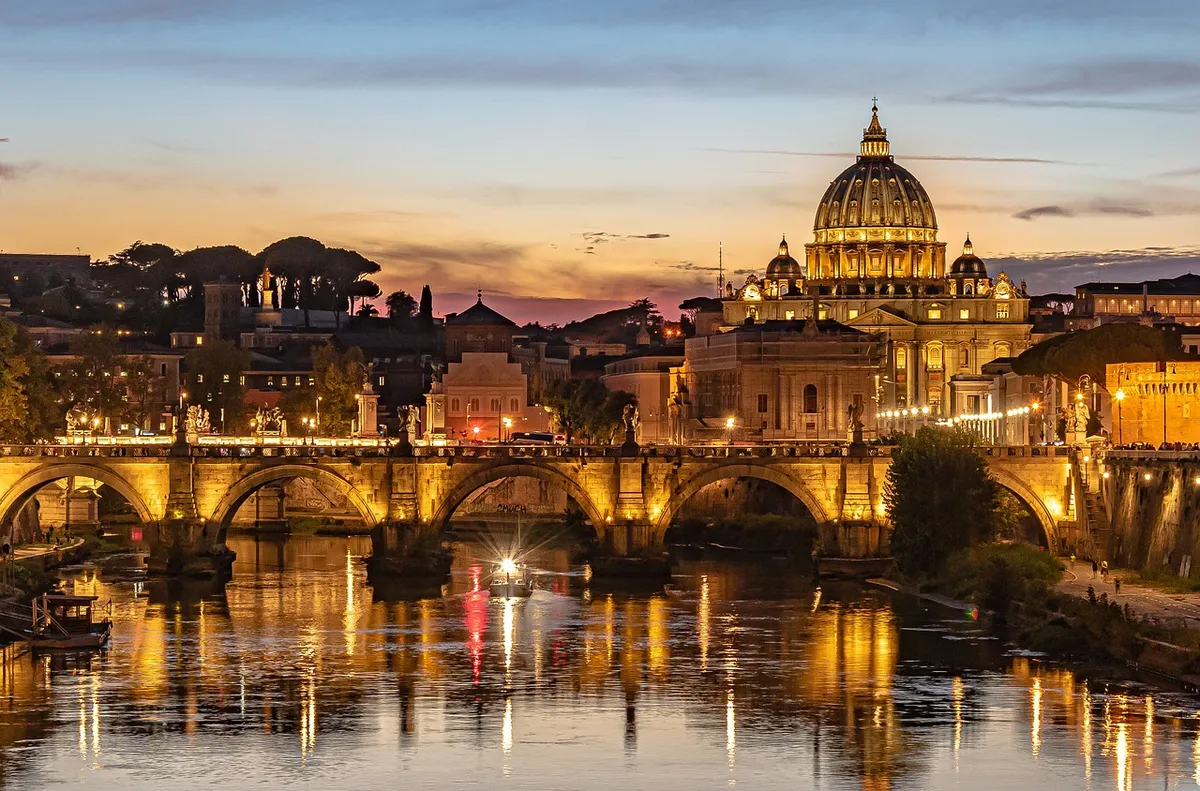

Rome was not a religious city, it was a secular city. We had to think about how to rebuild the Christian fabric of the community. To meet this challenge, new directions, new tools had to be found. The Pope announced the Synod with a view to implementing the council's teachings in various pastoral fields. He promoted the so-called urban mission, so that believers would cease to be anonymous, that they would come out of the "hiding" in which they would hide within the parish, so that the Church might gain missionary momentum. Religious and spiritual engagement was accompanied at the same time by an interest in social problems.
One Sunday, a visit the northern part of the city, in the heart of Tiburtina, an industrial district, was scheduled. At that time, there was a project to relocate some companies, especially small businesses, to other areas, which entailed the risk of thousands of families living and working there being stripped of their jobs. The Holy Father was among the owners and laborers who fought side by side for the common good. He listened to them and openly expressed his support.
A visit to the Capitol in mid-January 1998 was yet another confirmation of Karol Wojtyla's special interest in Rome. It also confirmed his long-standing efforts to raise awareness among Romans of the great role the city can play at international level. Moreover, on a spiritual level, the Jubilee Year of 2000 clearly supported that. A non-Italian Pope, a Pope from Poland, was needed to recall that the word ROMA – Rome, if read from the end, means AMOR – Love.
With the consent of Cardinal Stanisław Dziwisz - "Testimony".
TBA marketing communication Publishing House. Warsaw 2007