
Conservative? Traditionalist? What does that mean?!
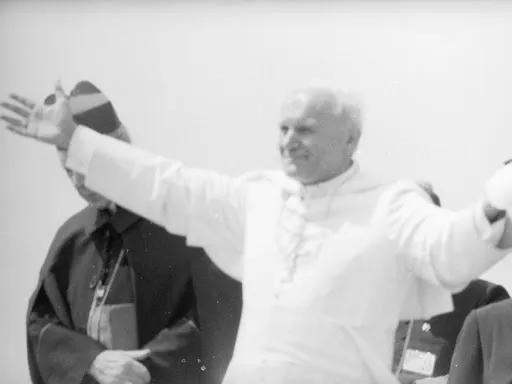
John Paul II was a traditionalist on issues that should have been outlined in the traditional way. In the Church, Tradition is an extremely important element. After all, we have two sources of Revelation: Sacred Scripture and Tradition. Besides them there is also a theological tradition, there are national traditions, culture, Church. A nation without roots would dry up like a tree. The Holy Father has sought to cultivate and care for the roots of Christian Europe.
Conservative? Traditionalist?
The same reference to moral issues should be repeated. Karol Wojtyła was a very modern man, which was visible in his first book "Love and Responsibility". (...) He remained modern also as Pope. This manifested itself in the arguments, in the approach to various issues and, above all, in the new perspective on social science. Where it was necessary, he was progressive. Where it was essential, he remained a traditionalist, in the right sense.
The Pope was never convinced of the correctness of the "truths" that ruled the world and history at the time. For example, he did not share the view that a future without a spiritual dimension is waiting for a modern man. Or, that the ultimate goal of the secularization process would be to eliminate religion, or at least to limit it to sacristy and to one's own conscience. It was foreseen that the younger generation would definitely move away from the faith, from the Church. John
Paul II never became convinced that Europe would forever remain divided, abandoning the tradition of unity that had, after all, grown out of the Christian faith. Perhaps this nonconformist attitude of the new Pope has begun to bring anxiety to politics, international diplomacy, and the still divided world of religions.
With the consent of Cardinal Stanisław Dziwisz - "Testimony".
TBA marketing communication Publishing House. Warsaw 2007