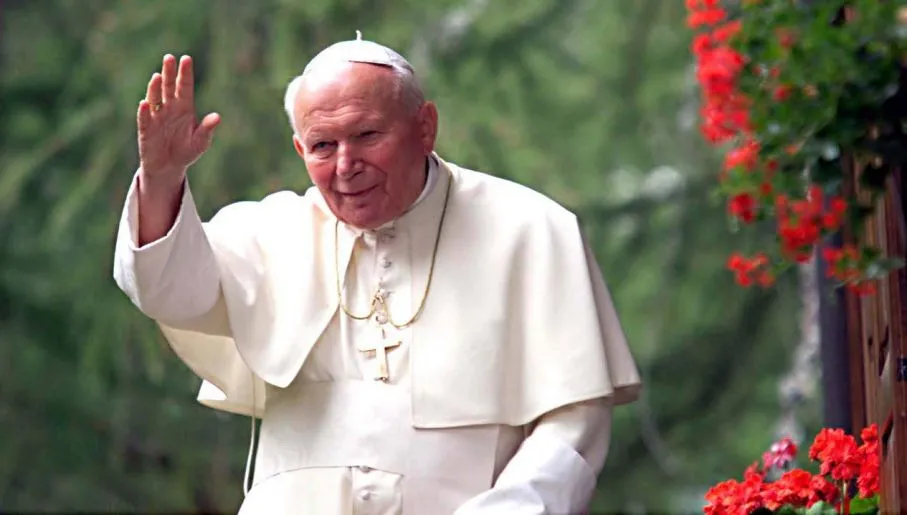

Pope Wojtyła was an internally independent man, although of course he asked others for cooperation and consultation. He was an attentive listener, deepening the ideas suggested to him, learning everything, reading, but not imitating. When he had a sufficiently clear picture of the situation, he prepared a short synthesis, and then on the basis of it he formulated his own thoughts and thus took a certaine direction of action.
This makes it easier to understand the relationship between John Paul II and the Roman Curia, helps to dispel the "myths" that the Pope did not attach enough importance to its role, and, on the other hand, that the Curia needed a long time to fully accept the Pope who came from outside, the Pope with a different view of the world and the course of history.
Each Pope rules the Church and the Curia in a way that best suits his personality, his sensitivity, his vision of the Community of the Church. So did John Paul II. His moral authority, his actions and his undertakings set the lines of the curriculum, which was carried out with full conviction by the various dikasteria. It should be emphasized that the Pope valued the work of the Roman Curia and considered cooperation with it necessary. He left a great deal of freedom to Curia, to prepare documents, respecting the people working there. But in the end, it was he who made the decisions himself. This is confirmed by the fact that after a long and tedious process of updating the Code of Canon Law, a copy of the final text was brought to the Holy Father. The authors were convinced that the work was finished. The Pope, however, called them to himself and said that after reading the document three times, he found several points to return to. Over the next few days, he looked at the entire project step by step
With the consent of Cardinal Stanisław Dziwisz - "Testimony".
TBA marketing communication Publishing House. Warsaw 2007