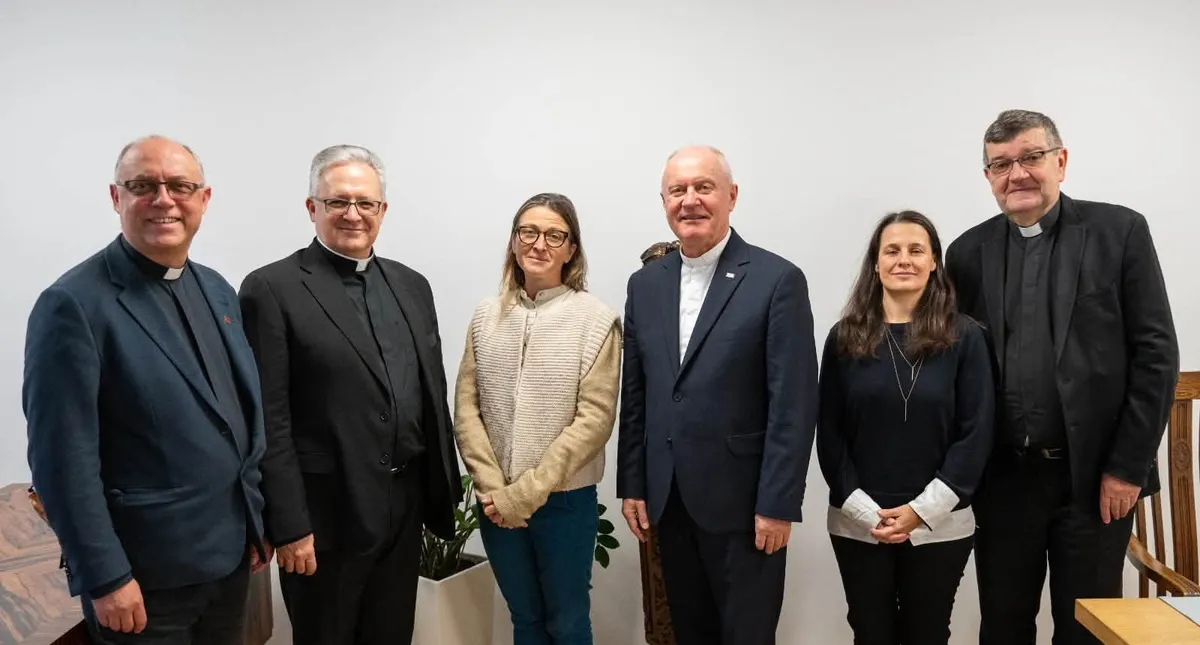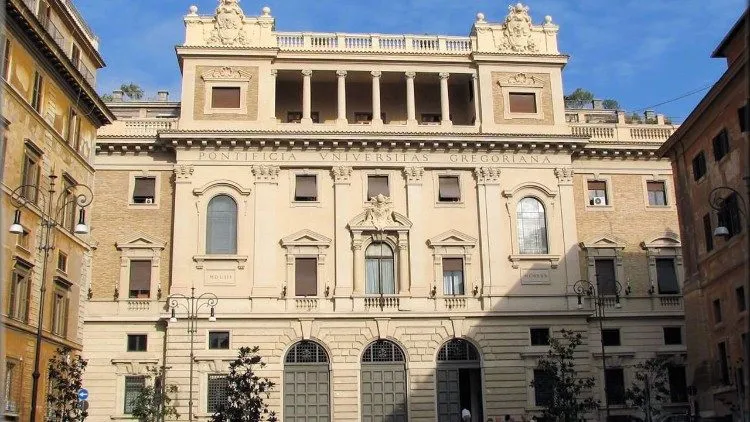

"Blood from your blood, bones from your bones" is the title of a two-volume study on the pontificate of St. John Paul II and the Churches in Central and Eastern Europe. A session at the Pontifical Gregorian University is also devoted to this topic today.
The work was prepared under the lead of Prof. Jan Mikrut and contains more than 50 articles on the pontificate of John Paul II and his relations with the countries and churches of Central and Eastern Europe. A quote from John Paul II's homily delivered on June 3, 1979 in Gniezno, during his first pilgrimage to Polish was used as the title. During this pilgrimage, the Pope addressed all Christians in Central and Eastern Europe, expressing not so much a political declaration, but pointing to the special charism and vocation of the Pope from Poland, who was called upon to show the "spiritual Christian unity of Europe". For John Paul II, Europe should breathe with two lungs: eastern and western - said Prof. Jan Mikrut of the Pontifical Gregorian University.
"Among the Slavic peoples, John Paul II adopted the attitude of the bard of these nations, who reminded them of the beauty of their traditions, of their glorious past, of their Christian and Catholic roots. The changes began to emerge after Gorbachev was elected first party secretary with his ‘perestroika’. Gorbachev himself said that without John Paul II there would have been no fall of communism and the Berlin Wall would not have fallen. Such a pastoral mission, but also in a sense, the political one of Pope John Paul II, was to create independent democratic states on the rubble of the failed post-Soviet system, emphasizes Fr. Mikrut. This can be seen very well in the relations that the Holy See began to establish with the countries of Central and Eastern Europe, including the fact that it without hesitation recognized the diplomatic independence of the states that formed after the break-up of the former Yugoslavia. The Pope's wish was that the countries of Central and Eastern Europe should sooner also be integrated into the European Union's forming system. When he walked under the Brandenburg Gate with Helmut Kohl during a visit to Berlin, it seemed like the culmination of a historical process that closed with precisely those facts over which John Paul II had a great influence."
Krzysztof Ołdakowski SJ